
The author of Self World
Volodymyr Pavlyshyn
Principal engineer and architect in Berlin. Agent memory, knowledge graphs, and identity and trust for AI agents. Twenty-three years in the industry, from COBOL and Smalltalk to Rust.
My work
I have been a founding engineer twice, and I build tools for modelling knowledge. Self World is a side project in the same spirit: a language where everything is an object you can open and change while it runs.
Affinidi
Founding engineer on self-sovereign identity: DID and Sidetree protocol work, and a verifiable-credentials platform taken from zero to a live airport integration in Singapore in four weeks. I am back at Affinidi now, working on agent identity and trust protocols.
Mykin.ai
Founding engineer on a privacy-first personal AI: semantic memory for agents that runs on the phone, a personal knowledge graph with vector search and clustering, on-device.
Before that
Zalando, TomTom and LiveIntent.
Tools
VS Code extensions built on one conviction: draw the model, ship the text.
- Factum ORM: conceptual schemas in ORM 2, read back as plain sentences
- LPG Modeler: design a property graph once, generate LadybugDB, Neo4j, SHACL and OWL
- Causal Canvas: causal models that warn you when you adjust for a collider
Self World
The Self language in Rust: an outliner desktop, Morphic interfaces, a translator to JavaScript, and the mini book No, I Am Your Father. Source on GitHub.
Work with me
I take on advisory work: agent memory architecture, agent identity and trust, architecture review and team workshops. Details at pavlyshyn.me/services.
Books
19 books on Leanpub, most of them on agent memory and knowledge graphs. Leanpub means variable pricing (you decide what to pay above the minimum), and the books keep updating after you buy them. All books on Leanpub →
Agent memory
What memory means for an agent, how it changes over time, and the engineering loop that keeps it honest.
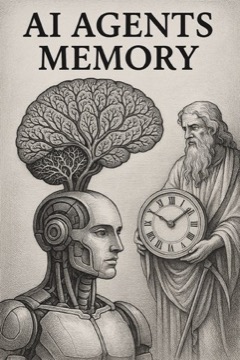 AI Agents Memory Empowered by Knowledge Graphs
The starting point: why retrieval alone is not memory, and how a knowledge graph gives an agent something it can reason over instead of merely search.
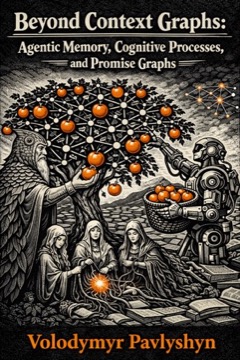 Beyond Context Graphs
Agentic memory as a set of cognitive processes rather than a store — extraction, consolidation, and promise graphs for agents that cooperate without a central authority.
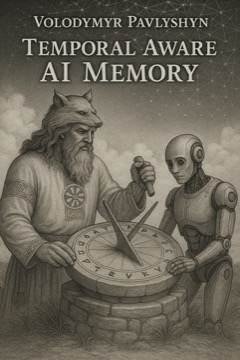 Temporal Aware AI Memory
Time as a first-class dimension in agent memory: bi-temporal facts, decay, recency-aware retrieval, and causal ordering across episodic and semantic stores.
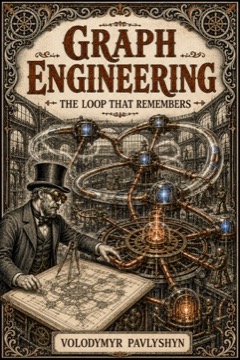 Graph Engineering: The Loop That Remembers
The engineering loop around a graph that keeps learning: what to extract, what to consolidate, what to forget, and how to keep the whole thing honest over time.
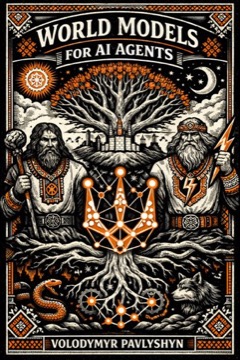 World Models for AI Agents
A structured representation of the environment an agent reasons about, and how to build one that supports decisions rather than descriptions.
Knowledge modelling
How to shape what an agent knows so it can reason over it, not just retrieve it.
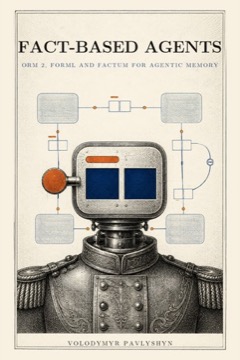 Fact-Based Agents
Elementary facts as the unit of agent knowledge. Attribute-free modelling that a domain expert can read back as sentences — and an agent can reason over without guessing.
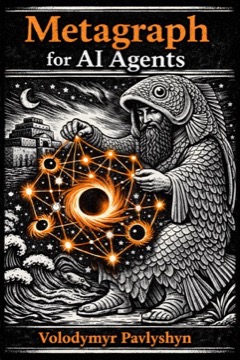 Metagraph for AI Agents
Higher-order structure — edges over edges, hyperedges, reified relations — for agents that must reason about statements, not just facts. Bipartite encodings aligned with HyperGraphRAG.
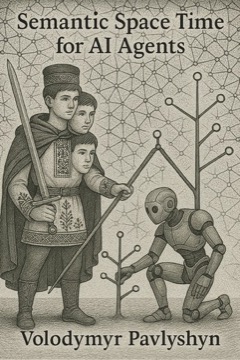 Semantic Space Time for AI Agent Ready Graphs
Mark Burgess's Semantic Spacetime ontology — NEAR, LEADS-TO, CONTAINS, EXPRESSES — applied to build graphs whose semantics stay consistent under retrieval and reasoning.
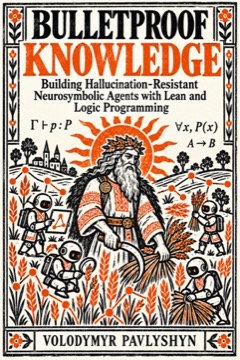 Bulletproof Knowledgein progress
Hallucination-resistant neurosymbolic agents in Lean 4 and λProlog. A fact enters memory only with a kernel-checked proof that memory stays consistent, and an answer leaves it only with a proof from what is stored. The LLM proposes; Lean decides.
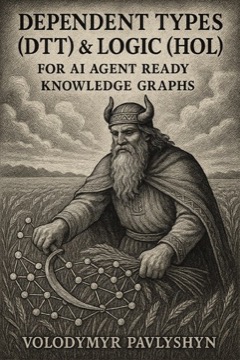 Dependent Types & Logic for AI Agent Ready Knowledge Graphs
What dependent type theory and higher-order logic offer a knowledge graph: constraints that hold by construction, and models that cannot express nonsense.
Embedded & edge substrates
Hands-on handbooks for the databases memory runs on.
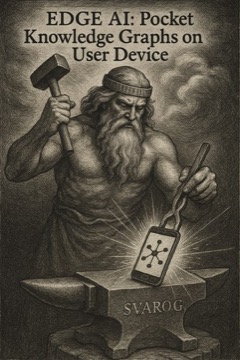 Edge AI: Pocket Knowledge Graphs on User Device
A knowledge graph that fits in a pocket. Local-first, privacy-first memory that ships as a file and runs in-process — no server, no network hop, nothing leaving the device.
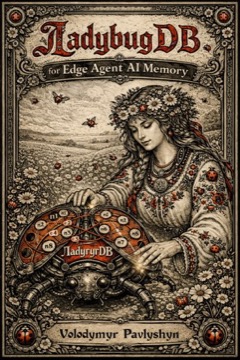 LadybugDB for Edge Agent AI Memory
An embedded columnar graph database as the substrate for agent memory: how it stores, how it traverses, and why in-process changes what an agent can afford to ask.
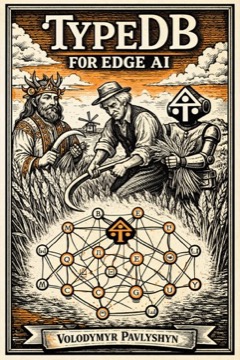 TypeDB for Edge AI Agents
Strongly-typed knowledge graphs as on-device agent memory: PERA modelling, polymorphic entity-relation-attributes, and SHACL-style validation at the edge.
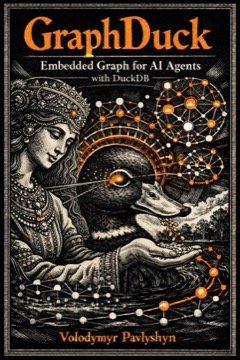 GraphDuck: DuckDB for Embedded AI Agents and Graphs
Graph workloads on a columnar analytical engine. What DuckDB gives you for free, where it needs help, and how far an embedded analytical store carries agent memory.
 Cypher 103 with LadybugDB
Cypher past the tutorials — the query patterns that actually come up when a graph is doing an agent’s remembering for it.
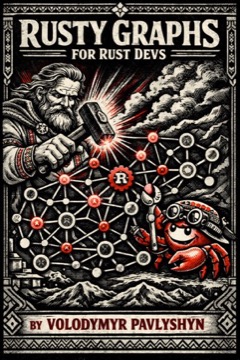 Rusty Graphs — AI Ready Graphs for Rust Developers
Building agent-ready graph infrastructure in Rust: the crates, the trade-offs, and the parts you still have to write yourself.
Architecture & practice
How engineering decisions turn into business outcomes: clarity, judgement, and working alongside agents.
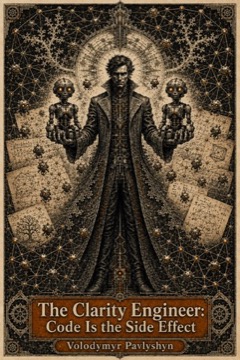 Clarity Engineer: Code Is the Side Effect
The argument that an engineer’s real output is clarity, and the code is what falls out of it. What changes when you take that seriously.
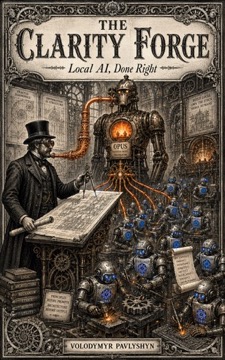 Clarity Forge: Local Coding Agent Done Right
Building a coding agent that runs on your machine and earns its place in the loop — context, memory, and the discipline that keeps it useful past the demo.
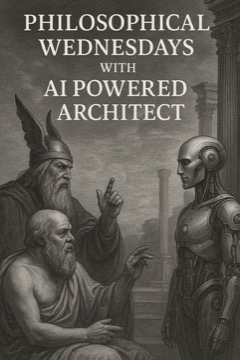 Philosophical Wednesdays with an AI Powered Architect
Weekly arguments with a machine about architecture, meaning, and what we are actually doing. Less a manual than a record of thinking out loud.